Private firms allowed into Venezuela’s oil industry
Venezuela opens oil sector to private companies under new law after political upheaval
- By Gurmehar --
- Friday, 30 Jan, 2026
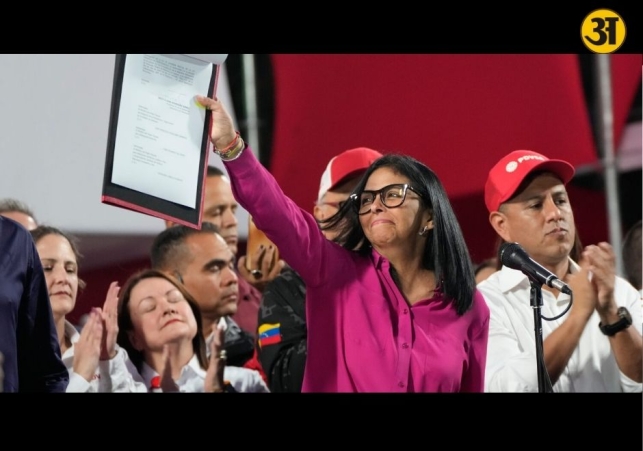
Venezuela has taken a major and historic step by opening its oil sector to private companies under a new law signed this week. The decision marks a sharp break from decades of state control over the country’s most valuable natural resource. The law was signed by acting President Delcy Rodríguez just hours after it was approved by the National Assembly, showing how urgently the new leadership wants to change the direction of the economy.
The move comes at a dramatic moment for the country. It follows the capture of President Nicolas Maduro by United States forces in Caracas during a high-profile military operation. After Maduro was taken into custody, Rodríguez assumed the role of acting President and quickly began pushing policies aimed at reshaping Venezuela’s economic future. Opening the oil sector to private participation is being described as the most important reform of her short tenure so far.
Venezuela holds some of the world’s largest proven oil reserves, yet its oil production has collapsed over the past decade due to mismanagement, lack of investment, corruption, and international sanctions. The government hopes that allowing private companies to take a larger role will help revive production, bring in foreign capital, and stabilize the struggling economy.
What the new oil law changes
For years, Venezuela’s oil industry was fully dominated by the state-owned company Petróleos de Venezuela SA, commonly known as PDVSA. The company had exclusive control over oil exploration, production, pricing, and sales. Private and foreign companies could only participate through limited partnerships in which the state held the dominant role. This model was strengthened during the rule of former President Hugo Chávez, who believed that oil revenues should remain firmly under state control.
The new law changes this structure in a significant way. Under the updated rules, private companies are allowed to manage oil production activities directly, provided they meet strict financial and technical requirements. These companies must submit detailed business plans to the Oil Ministry, showing that they have the resources, experience, and technology needed to operate effectively. Once approved, they can take full responsibility for oil operations at their own cost and risk.
ALSO READ: Trump warns Iran next attack will be far worse if no nuclear deal is reached
ALSO READ: Netanyahu’s taped phone camera sparks online debate over digital safety
However, the law makes it clear that Venezuela’s oil and gas reserves will still belong to the state. Private firms are not buying the oil fields themselves. Instead, they are being given the right to operate and manage them under government oversight. This approach is meant to balance private efficiency with state ownership of national resources.
Another major change involves legal disputes. Previously, companies working in Venezuela were required to resolve all disputes in Venezuelan courts, which many foreign investors saw as slow and politically influenced. Under the new law, private firms are allowed to take disputes to independent international arbitration. This provision is expected to reassure investors who have long been hesitant to operate in the country due to legal risks.
The law also updates the tax and royalty structure. It sets a maximum royalty rate of 30 percent on oil extraction. At the same time, it gives the government flexibility to adjust royalty rates for individual projects based on factors such as investment size, production costs, and global competitiveness. Officials say this will help make Venezuela’s oil projects more attractive in a highly competitive global energy market.
Political context and future impact
The timing of the reform is as important as the content of the law itself. Rodríguez signed the bill shortly after speaking with United States President Donald Trump and Secretary of State Marco Rubio. According to reports, discussions included how Venezuelan oil exports would be handled and how revenues would flow under the new political arrangement. Just days earlier, US officials had briefed lawmakers on Washington’s plans regarding Venezuela’s oil sector.
Rodríguez has defended the policy shift as a decision made for future generations. She described it as a forward-looking move aimed at rebuilding the country and creating opportunities for children and young people. Her supporters argue that the old model failed to deliver prosperity and that change was unavoidable.
Critics, however, see the reform as a betrayal of Venezuela’s long-standing social and political movement that emphasized state control over natural resources. They fear that opening the oil sector to private firms could reduce public oversight, increase inequality, and make the country vulnerable to foreign influence. Some have also questioned whether the rapid approval of the law allowed enough public debate.
Despite the criticism, many economists believe the reform could help Venezuela recover if implemented carefully. Oil production has fallen to a fraction of its previous levels, and the country lacks the money and technology needed to fix aging infrastructure. Private investment could help restart idle oil fields, improve efficiency, and increase exports, bringing in much-needed revenue.
The oil law was last significantly updated about twenty years ago, during the early years of Hugo Chávez’s presidency. Since then, global energy markets have changed dramatically, and Venezuela’s economy has suffered repeated shocks. The new leadership is betting that a more open and flexible oil sector can play a key role in national recovery.
Whether the reform succeeds will depend on political stability, investor confidence, and how transparently the new system is managed. For now, Venezuela has signaled that it is turning a page in its oil policy, ending an era of strict state monopoly and stepping into uncertain but potentially transformative territory.
Related News